Work App
Info
Designing the future of decentralized labor from the ground up. As the sole design lead, I authored the structural genesis and visual evolution of Work—a global crowd-hiring ecosystem built on the World Network. Moving from a blank canvas to a mature V2 reality, my framework was rooted in pure creative pioneering: leveraging fluid design intuition to translate complex blockchain validation into a lucid, elegant interface centered entirely on human care and effortless interaction.
Designing the future of decentralized labor from the ground up. As the sole design lead, I authored the structural genesis and visual evolution of Work—a global crowd-hiring ecosystem built on the World Network. Moving from a blank canvas to a mature V2 reality, my framework was rooted in pure creative pioneering: leveraging fluid design intuition to translate complex blockchain validation into a lucid, elegant interface centered entirely on human care and effortless interaction.
Year
2025 - Present
Client
Ottofeller
Services
Lead Product Design & Platform Evolution


Platform Overview
Platform Overview
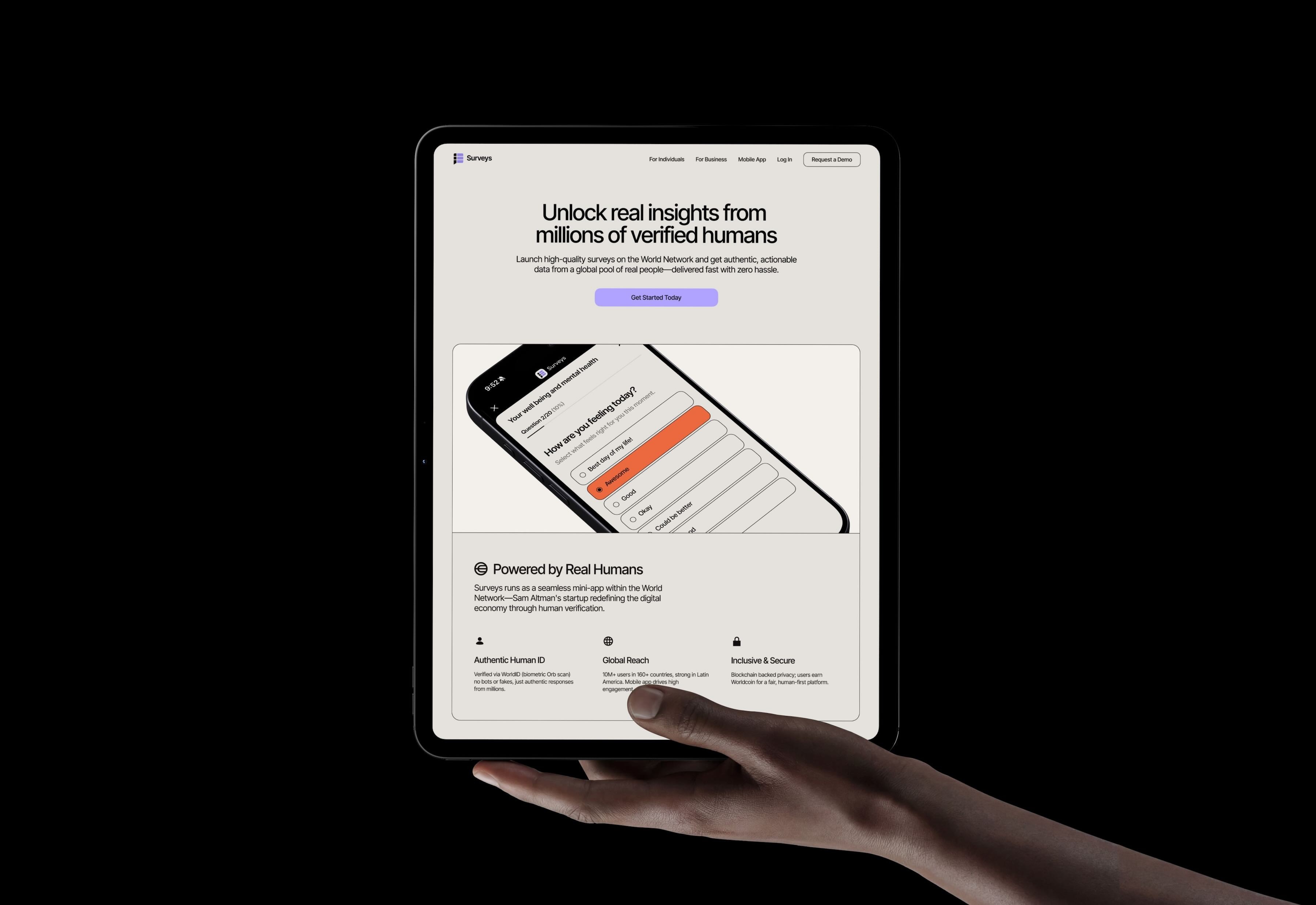
By utilizing the World Network’s verified human identity layer, Work introduces a highly specialized engine for global bulk-hiring: allowing users to instantly launch and scale asynchronous jobs globally with zero administrative hassle or the security risks of bots and scams. The primary design mandate was protecting the user's focus through meticulous management of screen real estate and extreme tap reduction. By engineering high-density workflows and automated guardrails to keep active jobs moving efficiently, the interface brings absolute clarity and trust to an otherwise complex marketplace ecosystem.
By utilizing the World Network’s verified human identity layer, Work introduces a highly specialized engine for global bulk-hiring: allowing users to instantly launch and scale asynchronous jobs globally with zero administrative hassle or the security risks of bots and scams. The primary design mandate was protecting the user's focus through meticulous management of screen real estate and extreme tap reduction. By engineering high-density workflows and automated guardrails to keep active jobs moving efficiently, the interface brings absolute clarity and trust to an otherwise complex marketplace ecosystem.
Zero-to-One Velocity
Zero-to-One Velocity
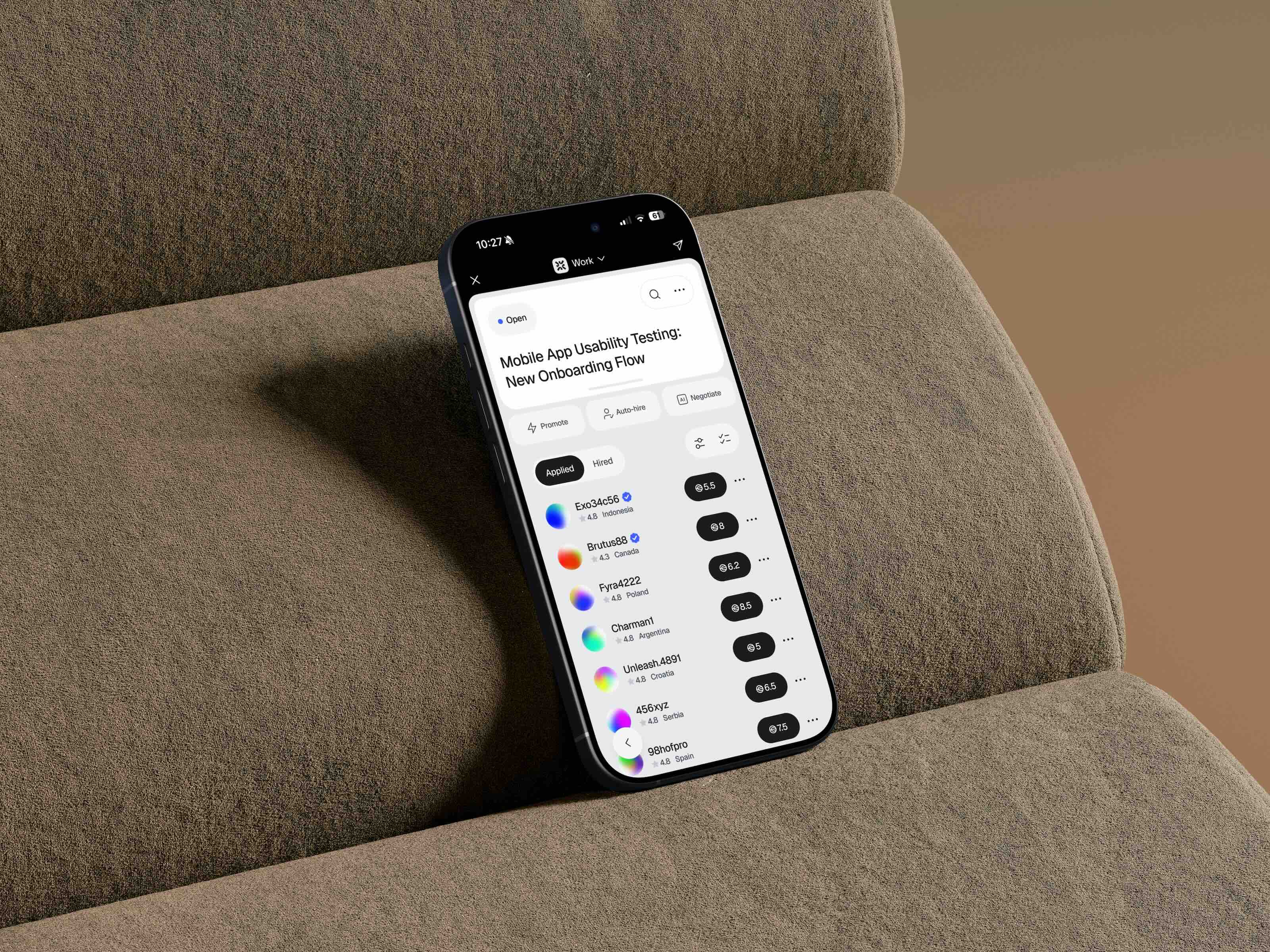
Transforming an ambitious founder vision into an active, high-utility marketplace requires intense constraint management. Tasked with delivering a functional product to market in under 90 days, I distilled the raw concept into a lean, high-fidelity MVP. The strategic focus was entirely on establishing a frictionless core transaction path—intentionally isolating and stripping away peripheral feature noise to ensure the primary bulk-hiring loop was structurally flawless from the very first transaction.
Transforming an ambitious founder vision into an active, high-utility marketplace requires intense constraint management. Tasked with delivering a functional product to market in under 90 days, I distilled the raw concept into a lean, high-fidelity MVP. The strategic focus was entirely on establishing a frictionless core transaction path—intentionally isolating and stripping away peripheral feature noise to ensure the primary bulk-hiring loop was structurally flawless from the very first transaction.

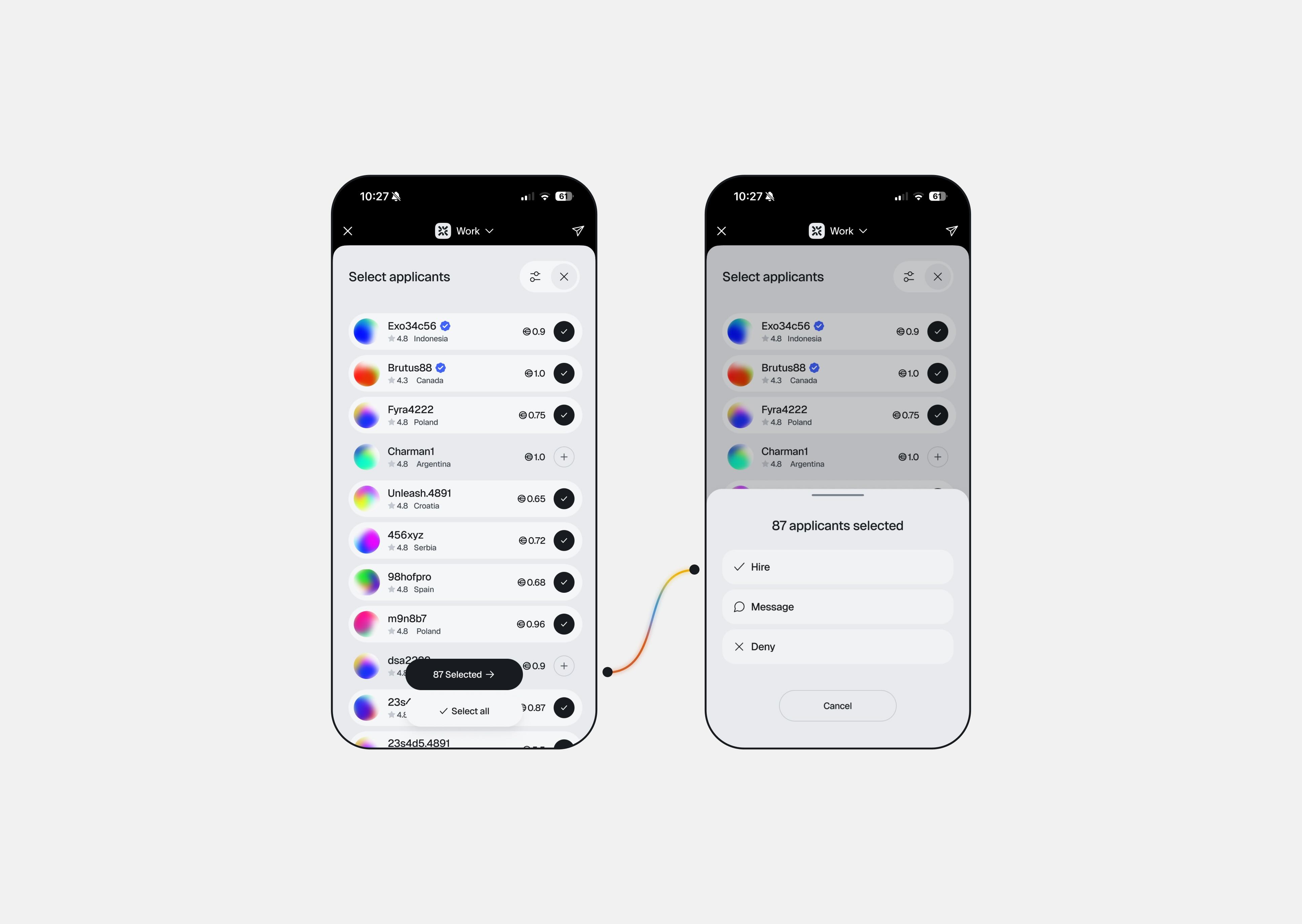
The immediate hurdle after launching this baseline MVP was handling high-volume scaling. In a typical marketplace, hiring is a slow, one-by-one process, but our users needed to onboard massive groups of workers simultaneously. We bypassed this constraint by establishing a foundational bulk-hiring mechanism—introducing a multi-select pattern and a centralized hiring drawer that allowed clients to review, batch-process, and contract dozens of applicants in a single action, fundamentally changing the operational speed of the platform.
The immediate hurdle after launching this baseline MVP was handling high-volume scaling. In a typical marketplace, hiring is a slow, one-by-one process, but our users needed to onboard massive groups of workers simultaneously. We bypassed this constraint by establishing a foundational bulk-hiring mechanism—introducing a multi-select pattern and a centralized hiring drawer that allowed clients to review, batch-process, and contract dozens of applicants in a single action, fundamentally changing the operational speed of the platform.
Complexity at Scale
Complexity at Scale
Post-launch growth quickly exposed a severe operational bottleneck: highly fragmented, unstandardized coordination between clients and large groups of newly hired independent workers. As the volume of concurrent hires scaled, open-ended messaging and manual administrative handoffs led to systemic communication failures and delayed onboarding. Instead of treating this as a superficial support problem, I re-engineered the platform's core hiring architecture to eliminate manual administrative friction and force real-time operational alignment across the entire marketplace.
Post-launch growth quickly exposed a severe operational bottleneck: highly fragmented, unstandardized coordination between clients and large groups of newly hired independent workers. As the volume of concurrent hires scaled, open-ended messaging and manual administrative handoffs led to systemic communication failures and delayed onboarding. Instead of treating this as a superficial support problem, I re-engineered the platform's core hiring architecture to eliminate manual administrative friction and force real-time operational alignment across the entire marketplace.

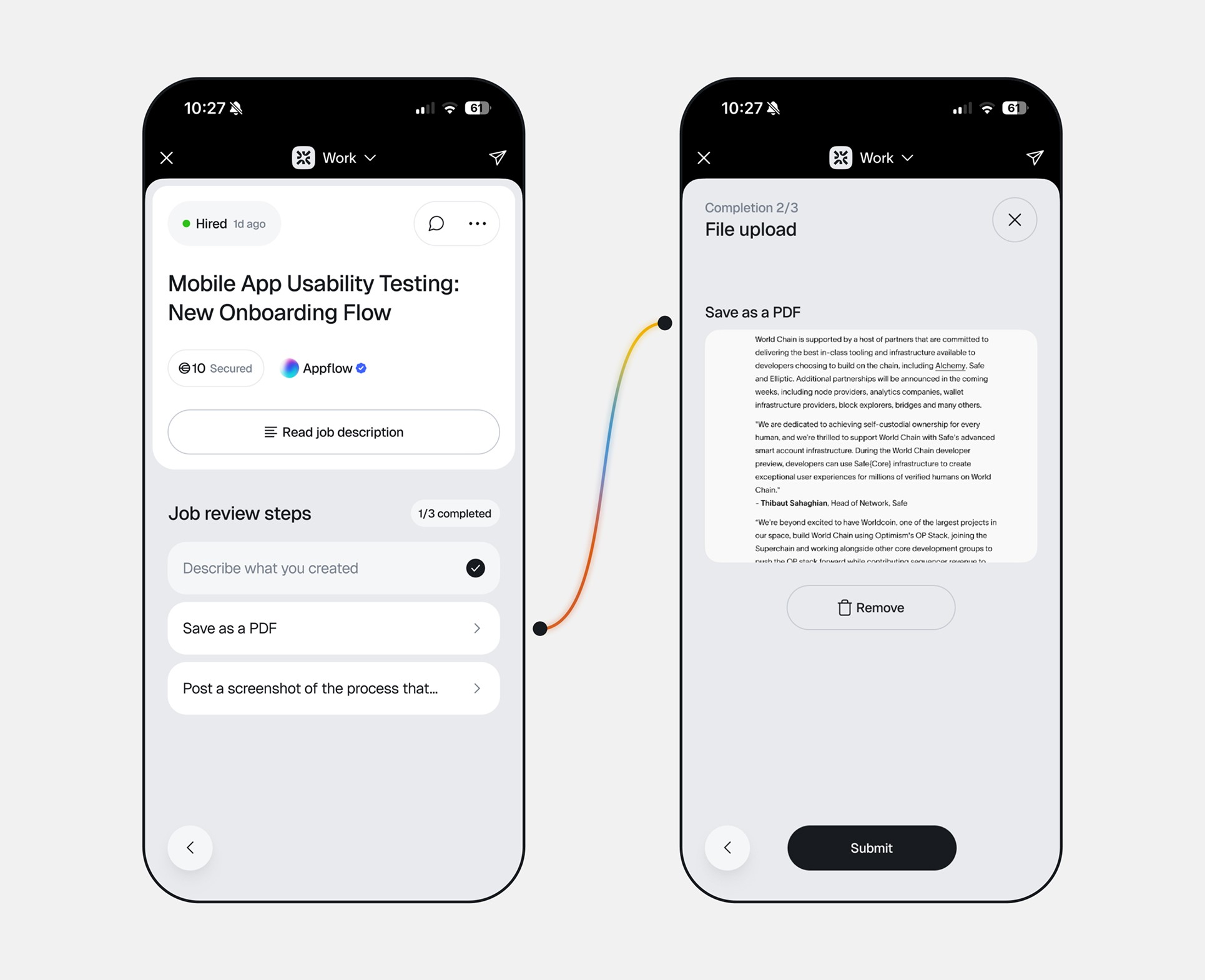
To automate alignment, I restructured the hiring workflow to build clear, objective guardrails directly into the product ecosystem. First, I integrated automated mass-onboarding triggers directly into the multi-select hiring drawer, broadcasting unified instruction instantly the exact second a batch hire is executed. Second, I replaced open-ended handoffs with a linear, checklist-driven framework for structural review steps. By forcing strict formatting constraints (text fields, direct links, file uploads, etc.) upfront, the interface effortlessly automated quality control and verification at scale.
To automate alignment, I restructured the hiring workflow to build clear, objective guardrails directly into the product ecosystem. First, I integrated automated mass-onboarding triggers directly into the multi-select hiring drawer, broadcasting unified instruction instantly the exact second a batch hire is executed. Second, I replaced open-ended handoffs with a linear, checklist-driven framework for structural review steps. By forcing strict formatting constraints (text fields, direct links, file uploads, etc.) upfront, the interface effortlessly automated quality control and verification at scale.

Operational Leverage
Operational Leverage
When a marketplace scales to hundreds of thousands of applicants, finding and managing the right talent becomes an information extraction problem. To give clients the ability to navigate this data density, I designed a suite of advanced filtering and mass-action workflows. The pinnacle of these tools was the Auto-Hiring feature, which allows clients to put workforce deployment entirely on autopilot. Instead of manually reviewing endless individual applications, clients can now configure specific filtering parameters—like location, time zone, category, and rating—right when a job is created, allowing matching to happen instantly behind the scenes.
When a marketplace scales to hundreds of thousands of applicants, finding and managing the right talent becomes an information extraction problem. To give clients the ability to navigate this data density, I designed a suite of advanced filtering and mass-action workflows. The pinnacle of these tools was the Auto-Hiring feature, which allows clients to put workforce deployment entirely on autopilot. Instead of manually reviewing endless individual applications, clients can now configure specific filtering parameters—like location, time zone, category, and rating—right when a job is created, allowing matching to happen instantly behind the scenes.


Operating a high-volume workforce on autopilot required building strict, deterministic guardrails around cost and control. To eliminate payment friction and protect client budgets, the Auto-Hiring interface integrates directly with a dedicated upfront escrow system. Clients fund the escrow once, establish strict maximum hiring limits, and set the operational pacing of the intake. If the escrow account runs low, the system gracefully pauses the intake until it is topped up. By combining these advanced filtering controls with instant automated onboarding messages and a global, one-tap safety pause toggle, the interface gives clients complete, stress-free sovereignty over their spending and recruitment.
Operating a high-volume workforce on autopilot required building strict, deterministic guardrails around cost and control. To eliminate payment friction and protect client budgets, the Auto-Hiring interface integrates directly with a dedicated upfront escrow system. Clients fund the escrow once, establish strict maximum hiring limits, and set the operational pacing of the intake. If the escrow account runs low, the system gracefully pauses the intake until it is topped up. By combining these advanced filtering controls with instant automated onboarding messages and a global, one-tap safety pause toggle, the interface gives clients complete, stress-free sovereignty over their spending and recruitment.

AI Workflows
AI Workflows
Integrating artificial intelligence into the platform focuses on removing operational friction through clean, intuitive automation patterns. To scale these capabilities, I designed interface models for two distinct automation workflows: native AI Negotiations and external AI Agent connectivity via API and Model Context Protocol (MCP). For negotiations, the UI introduces a fluid control panel directly within active chat threads, allowing clients to set specific parameters to autonomously handle pricing agreements. For developer-focused workflows, the interface visualizes external agents programmatically executing bulk-hires, verifying custom job milestones, and securely releasing escrow payments. By keeping these complex, asynchronous actions grounded in structured status feeds and absolute manual overrides, the design framework converts advanced technical capabilities into a highly reliable, human-centric operational tool.
Integrating artificial intelligence into the platform focuses on removing operational friction through clean, intuitive automation patterns. To scale these capabilities, I designed interface models for two distinct automation workflows: native AI Negotiations and external AI Agent connectivity via API and Model Context Protocol (MCP). For negotiations, the UI introduces a fluid control panel directly within active chat threads, allowing clients to set specific parameters to autonomously handle pricing agreements. For developer-focused workflows, the interface visualizes external agents programmatically executing bulk-hires, verifying custom job milestones, and securely releasing escrow payments. By keeping these complex, asynchronous actions grounded in structured status feeds and absolute manual overrides, the design framework converts advanced technical capabilities into a highly reliable, human-centric operational tool.


Collective Excellence
Collective Excellence
Shipping a live marketplace that expands almost daily requires moving past rigid documentation and establishing an active, continuous partnership with engineering. By collaborating constantly over Figma and Slack, the development team and I built a fluid, real-time feedback loop—sharing live application screenshots, troubleshooting layout constraints on the fly, and dynamically refining features the moment they were coded. Rather than delivering static handoffs, I initiated and managed the ongoing marriage between our master Figma UI kit and the front-end component library. This entire execution model was built on a foundation of mutual gratitude and care for the UX logic, turning daily technical challenges into a collaborative, highly rewarding craft.
The ultimate validation of this unified approach came from the broader ecosystem, with World Network (Tools for Humanity) recognizing the application as having the best UX to date within their mini-app store. Their team explicitly highlighted a desire to see our top-shelf design standards populate and elevate their digital space. This external milestone wasn't just a victory for the interface design itself; it was a direct reflection of what a small, cross-functional product team can achieve when they operate in lockstep. At the end of the day, launching a highly praised product into a major ecosystem isn't an individual milestone—it is a true team victory driven by shared intention, respect, and execution.
Shipping a live marketplace that expands almost daily requires moving past rigid documentation and establishing an active, continuous partnership with engineering. By collaborating constantly over Figma and Slack, the development team and I built a fluid, real-time feedback loop—sharing live application screenshots, troubleshooting layout constraints on the fly, and dynamically refining features the moment they were coded. Rather than delivering static handoffs, I initiated and managed the ongoing marriage between our master Figma UI kit and the front-end component library. This entire execution model was built on a foundation of mutual gratitude and care for the UX logic, turning daily technical challenges into a collaborative, highly rewarding craft.
The ultimate validation of this unified approach came from the broader ecosystem, with World Network (Tools for Humanity) recognizing the application as having the best UX to date within their mini-app store. Their team explicitly highlighted a desire to see our top-shelf design standards populate and elevate their digital space. This external milestone wasn't just a victory for the interface design itself; it was a direct reflection of what a small, cross-functional product team can achieve when they operate in lockstep. At the end of the day, launching a highly praised product into a major ecosystem isn't an individual milestone—it is a true team victory driven by shared intention, respect, and execution.